EBX-INDX86

$4,995.00
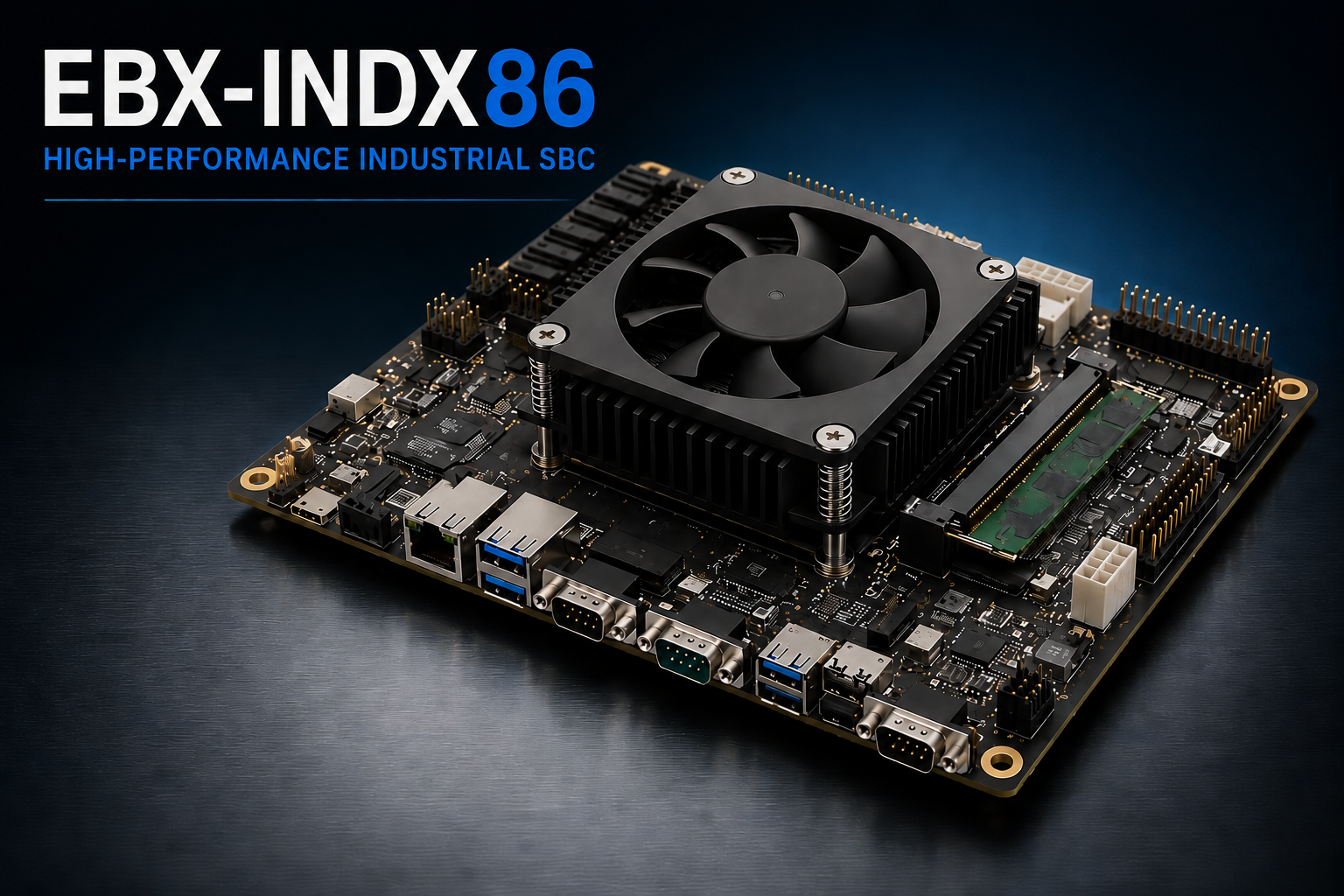
  • Cooling Systems: While many modern ARM-based SBCs are highly efficient and designed for fanless operation, high-performance x86 SBCs (such as those using multi-core Intel Core or AMD Ryzen CPUs) produce higher thermal output and frequently require active cooling (such as a fan cooler) or advanced passive heat dissipation methods.

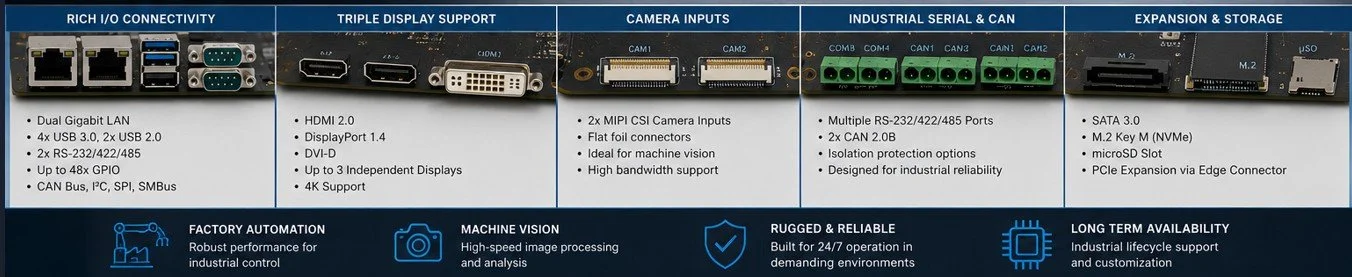
  • I/O Inputs: Industrial SBCs come with a wide variety of I/O capabilities. For example, the WINSYSTEMS' EBC-C413 (an EBX form factor board) includes 48 general-purpose I/O (GPIO) pins, dual Ethernet, and serial ports. Standard credit-card-sized modules like Qseven and SMARC 2.0 also offer extensive I/O, including 8x to 12x GPIOs, multiple USB 2.0 and USB 3.0 ports, and industrial serial or CAN buses.

  • HDMI and Displays: Basic consumer-grade SBCs typically come with standard USB and HDMI ports. Industrial modules like the COM Express Mini, Qseven, and SMARC 2.0 support advanced graphics interfaces, allowing for up to three independent displays and offering DVI, HDMI, and DisplayPort options.

  • Camera Inputs & Machine Vision: For tasks that usually require a frame grabber, the sources recommend x86 SBCs due to their raw computational power, which is ideal for machine vision and real-time data analysis. Additionally, Qseven and SMARC 2.0 modules natively support up to two MIPI CSI camera inputs via flat foil connectors directly on the board.

  • Cooling Systems: While many modern ARM-based SBCs are highly efficient and designed for fanless operation, high-performance x86 SBCs (such as those using multi-core Intel Core or AMD Ryzen CPUs) produce higher thermal output and frequently require active cooling (such as a fan cooler) or advanced passive heat dissipation methods.

  • I/O Inputs: Industrial SBCs come with a wide variety of I/O capabilities. For example, the WINSYSTEMS' EBC-C413 (an EBX form factor board) includes 48 general-purpose I/O (GPIO) pins, dual Ethernet, and serial ports. Standard credit-card-sized modules like Qseven and SMARC 2.0 also offer extensive I/O, including 8x to 12x GPIOs, multiple USB 2.0 and USB 3.0 ports, and industrial serial or CAN buses.

  • HDMI and Displays: Basic consumer-grade SBCs typically come with standard USB and HDMI ports. Industrial modules like the COM Express Mini, Qseven, and SMARC 2.0 support advanced graphics interfaces, allowing for up to three independent displays and offering DVI, HDMI, and DisplayPort options.

  • Camera Inputs & Machine Vision: For tasks that usually require a frame grabber, the sources recommend x86 SBCs due to their raw computational power, which is ideal for machine vision and real-time data analysis. Additionally, Qseven and SMARC 2.0 modules natively support up to two MIPI CSI camera inputs via flat foil connectors directly on the board.

Start Your Next IoT Adventure

If your project involves machine vision, real-time data analysis, or compute-heavy tasks, you should select an x86 SBC (such as multi-core Intel or AMD Ryzen CPUs) due to its high raw computational performance. Because these high-performance processors generate a greater thermal output, you must integrate an active cooling system, such as a fan cooler, or employ advanced passive heat dissipation methods to maintain stability and prevent overheating. Alternatively, if your system operates in an environment where dust or noise mandates a fanless design, an ARM-based processor is recommended for its exceptional power efficiency.